
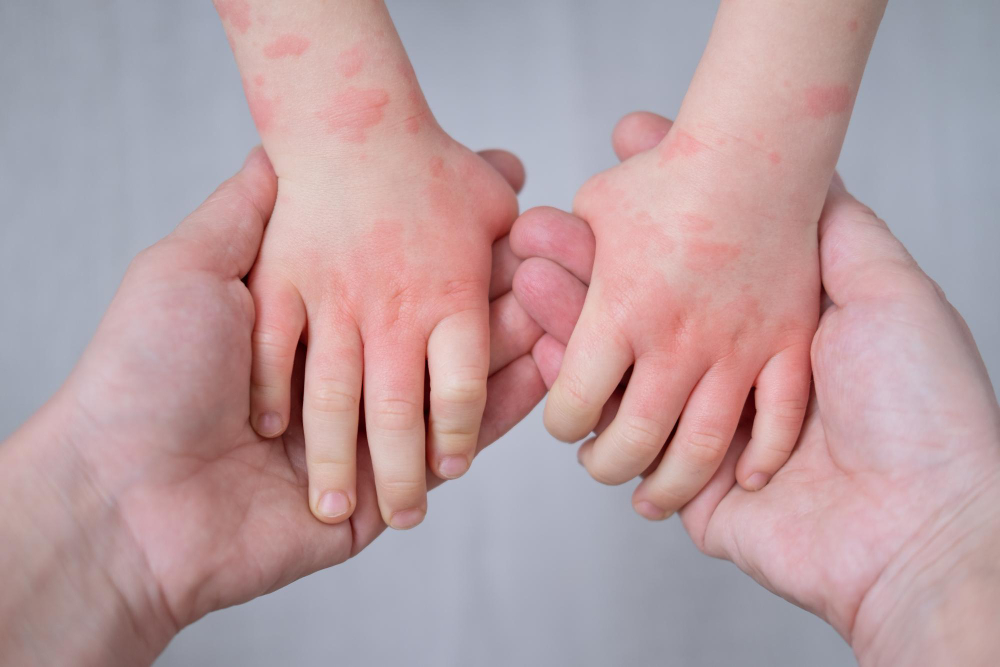
What is Eczema in Children?
Eczema in children is a common skin condition. It causes dry, itchy, and red skin. Many parents also know it as pediatric eczema or atopic dermatitis. According to the CDC, about 1 in 10 children in the United States have eczema. While it can start at any age, most cases begin before age five. Although eczema is not contagious, it can be uncomfortable. Early care helps manage symptoms and improve your child’s comfort.
Common Symptoms of Pediatric Eczema
Children with eczema often show certain signs. These symptoms can vary by age and skin type. However, most children experience:
Sometimes, symptoms get worse during flare-ups. For example, cold weather or certain soaps can trigger these episodes. If you notice these childhood eczema symptoms, it is wise to seek advice.
Causes and Risk Factors
Doctors do not know the exact cause of eczema in children. However, several factors can increase the risk. For instance, a family history of allergies or asthma makes eczema more likely. In addition, the skin’s barrier may not work well, letting moisture out and irritants in. Common triggers include:
Because each child is different, triggers may vary. Knowing your child’s triggers helps you prevent flare-ups.
How Eczema is Diagnosed in Kids
Pediatricians usually diagnose eczema by looking at the skin. They ask about symptoms and family history. Sometimes, doctors may check for allergies or infections. However, there is no single test for eczema. If needed, a doctor may refer your child to a skin specialist. Early diagnosis helps start eczema treatment for kids sooner.
Effective Treatment Options
Treating eczema in children focuses on easing symptoms and preventing flare-ups. Most children need a mix of treatments. Common options include:
In some cases, doctors may suggest light therapy. However, this is less common in young children. Always follow your doctor’s advice for eczema treatment for kids.
Home Care and Lifestyle Tips
Simple changes at home can help manage eczema in children. For example, you can:
Because eczema can be stressful, support your child emotionally. Encourage them not to scratch, and praise them for healthy habits.
Preventing Eczema Flare-Ups
Although eczema cannot be cured, you can help prevent flare-ups. Here are some tips:
With these steps, many families see fewer flare-ups. Still, if symptoms return, talk to your doctor about how to manage eczema in children.
When to See a Pediatrician
Sometimes, home care is not enough. At Pranaah Hospital, you should see a paediatrician if:
Early medical advice can prevent problems and help your child feel better.
Consult a paediatrician at Pranaah Hospital for personalised advice on managing eczema in children.